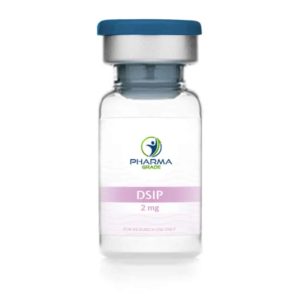
Nothing is more draining than staring at the ceiling while the mind refuses to slow down. This challenge pushes researchers to study the DSIP peptide because early findings show it may help guide the shift from wakefulness into calmer nighttime function. Labs track how DSIP interacts with signals that help ease the mind into more settled evening rhythms.
Insomnia often builds when stress rises or when nightly patterns break. DSIP studies examine how this peptide behaves during these moments to understand what changes inside the body when sleep becomes inconsistent. This ongoing work keeps DSIP involved in discussions that focus on why some nights fail to settle.
With DSIP appearing across so many insomnia discussions, attention naturally shifts to how it behaves inside the brain during those difficult nights.
Explore DSIP Peptide from PharmaGrade Store Denmark , a neuropeptide that helps regulate deep sleep and support calmer nighttime rest.
The Role of DSIP Peptide in Brain Recovery During Insomnia
Insomnia can push the brain into a prolonged state of high alert. Researchers monitor DSIP peptide to see whether its activity shifts when the brain attempts to ease this elevated state. Some studies highlight DSIP’s presence near pathways known for helping the mind slow down after extended wakefulness.
Denmark Scientists also examine how DSIP appears around changes in communication between brain regions during disrupted nights. These observations help build a clearer picture of how the brain works to regain control when rest stops following its usual flow.
Once these short-term changes are understood, a larger pattern starts to emerge when sleep remains broken for longer stretches.
What Happens in the Brain During Extended Disrupted Rest?
Extended periods of disrupted rest can create lasting adjustments in how the brain manages alertness and renewal. Some regions stay more engaged than usual when sleep breaks repeatedly, which can limit the mind’s ability to ease into restful stages. These changes also influence how different signals coordinate with one another during fragmented sleep.
Denmark Scientists track these conditions to understand why insomnia becomes more resistant over time. They observe adjustments in neural activity, chemical interactions, and cross-talk between different areas of the brain. When these processes drift away from their usual patterns, nights become harder to steady.
These shifts often influence how ready the brain feels for the following night, which brings another layer to insomnia research.
How Does Insomnia Affect the Brain’s Ability to Reset?
When insomnia continues for several nights, the brain struggles to return to its usual nighttime mode and remains more alert than needed. This extended alertness slows the natural adjustment cycle that supports smoother nights. Researchers monitor DSIP to identify how its signals shift when the brain tries to ease back into its preferred rhythm.
Other Denmark studies examine Epithalon and CJC-1295 under similar conditions. Epithalon connects to timing cues that guide daily cycles, while CJC-1295 appears in work linked to restoration and energy regulation. Each of these areas contributes to a broader view of how the brain tries to regain balance when sleep stays inconsistent.
Since Epithalon frequently appears in research tied to daily timing cues, its link to sleep rhythm becomes even more important, especially when comparing different peptides for sleep.
Discover Epithalon from PharmaGrade Store Denmark , a peptide that may help maintain circadian rhythm stability and promote more consistent sleep cycles.
Epithalon’s Role in Supporting Sleep Rhythm
Denmark Research on Epithalon often focuses on how it interacts with pathways that guide the body’s internal timing system. Scientists examine this connection because disruptions in these timing cues can make insomnia harder to break. When the sleep–wake rhythm drifts, the brain may struggle to follow a consistent nighttime pattern, and Epithalon appears in studies that examine how these timing signals respond.
Some researchers compare these findings with work on DSIP peptide, often noted for its involvement in deeper rest transitions. Studying both peptides together allows scientists to look at different angles that influence nighttime steadiness during challenging periods.
Sleep rhythm is one piece of the puzzle; the body’s ability to restore itself during prolonged rest disruption adds another.
What Role Does CJC-1295 Play in Recovery and Metabolic Balance?
Researchers study CJC-1295 because it influences pathways tied to restoration and metabolic rhythms. This focus grows when insomnia affects the body’s ability to maintain energy and nighttime repair. CJC-1295 appears in studies that track signals involved in tissue support and evening renewal during extended periods of disrupted rest.
Some research groups compare these findings with observations on DSIP peptide, which appears in discussions about deeper rest transitions. Studying both peptides together helps highlight different processes tied to mental and physical steadiness when sleep becomes irregular.
With these differences in mind, a comparison helps clarify where each peptide may offer distinct value in insomnia-related research.
Check out CJC-1295 from PharmaGrade Store Denmark , a peptide that supports recovery and metabolic balance pathways during periods of disrupted rest.
Which Peptide Shows the Most Potential for Insomnia Support?
Each peptide links to insomnia-associated topics in its own distinct way. DSIP peptide appears in work that focuses on deeper rest and the calming of nighttime activity. Epithalon ties into timing cues that influence the daily sleep–wake cycle, especially when rhythms lose consistency. CJC-1295 appears in discussions about renewal and energy support, both of which matter when sleeping peptides are compared across different aspects of nighttime function.
These perspectives show how each peptide aligns with different parts of the sleep process. The table below organizes these roles in a clear way to highlight what each one contributes to insomnia-related discussions.
Comparison Table
Peptide
Key Focus Area
Connection to Insomnia Support Topics
DSIP Peptide
Nighttime settling cues
Links to calmer transitions during evening rest
Epithalon
Daily timing alignment
Connects to the body’s internal clock and its guiding signals
CJC-1295
Renewal and energy support
Relates to repair and restoration affected by poor sleep
These insights shape how researchers view the future direction of DSIP and the peptides studied alongside it.
The Future of DSIP Peptide in Insomnia
DSIP peptide continues to hold interest in insomnia-focused work because it connects to signals that support calmer transitions into rest. As more projects examine how DSIP behaves under disrupted sleep, interest continues to build, and this movement brings hope for insights that may offer comfort to those who struggle with unsettled nights.
Epithalon and CJC-1295 contribute to this wider direction. Epithalon aligns with timing cues that guide daily cycles, while CJC-1295 connects with pathways tied to renewal and energy balance. Together, these peptides offer several angles that may shape future approaches aimed at improving nighttime comfort and consistency.
References:
[1] Bes F, Hofman W, Schuur J, Van Boxtel C. Effects of delta sleep-inducing peptide on sleep of chronic insomniac patients. A double-blind study. Neuropsychobiology. 1992;26(4):193-7.
[2] Schneider-Helmert D. DSIP in insomnia. Eur Neurol. 1984;23(5):358-63.
[3] Susić V, Masirević G, Totić S. The effects of delta-sleep-inducing peptide (DSIP) on wakefulness and sleep patterns in the cat. Brain Res. 1987 Jun 30;414(2):262-70.
[4] Moreno-Reyes R, Kerkhofs M, L’Hermite-Balériaux M, Thorner MO, et al. Evidence against a role for the growth hormone-releasing peptide axis in human slow-wave sleep regulation. Am J Physiol. 1998 May;274(5):E779-84.
Frequently Asked Questions about DSIP Peptide
How stable is DSIP peptide in the body?
DSIP peptide degrades rapidly in the bloodstream, with a half-life of just a few minutes. Researchers track it carefully to measure how long it remains active on sleep-related pathways. Its fast clearance means effects appear briefly, so understanding stability is essential when studying its role in regulating sleep patterns in research settings.
Can DSIP peptide influence sleep onset time?
DSIP peptide helps the brain shift from wakefulness to sleep. Animal studies show it can shorten the time to enter deep sleep, supporting faster sleep initiation. Its signaling appears to calm neural circuits and promote relaxation, making it a key focus in research examining how sleep begins and how transitions to deeper rest are regulated.
How does DSIP peptide influence deep sleep stages?
DSIP peptide increases slow-wave sleep, the deepest and most restorative stage of sleep. Research demonstrates that it strengthens the duration and stability of deep sleep, allowing the brain to recover efficiently. Its effects on slow-wave sleep make it a central focus for studies exploring how peptides regulate restorative sleep cycles in controlled research environments.
Does DSIP peptide impact circadian rhythms?
DSIP peptide interacts with pathways that help regulate the body’s internal clock. Studies indicate it can support stable sleep-wake cycles and maintain consistent nighttime patterns. By influencing timing signals in the brain, DSIP contributes to more predictable sleep rhythms in research models, highlighting its role in regulating circadian aspects of rest.
Does DSIP peptide affect REM or light sleep?
DSIP peptide primarily influences deep, slow-wave sleep, while its effects on REM and light sleep remain minimal or inconsistent. Research shows that it stabilizes restorative deep sleep without significantly altering lighter sleep stages. Understanding its selective effects helps researchers identify which aspects of sleep rely on DSIP signaling in controlled studies.
ALL PRODUCT INFORMATION AND ARTICLES ON THIS SITE ARE FOR EDUCATIONAL PURPOSES ONLY
DISCLAIMER: All products sold by PharmaGrade.Store are for research and laboratory use only. These products are not designed for use or consumption by humans or animals. They are not to be classified as a drug, food, cosmetic, or medicinal product and must not be mislabelled or used as such. By purchasing from our Website the buyer accepts and acknowledges the risks involved with handling of these products. All articles and product information provided on this Website are for informational and educational purposes only. Handling and use of these products should be restricted to suitably qualified professionals.
Boost Wellness with Hexarelin & CJC-1295 No DAC Denmark Peptides are one of the most essential components of the human body. They regulate numerous biological processes and can be an effective tool in aiding medical
Impact of Thymosin Alpha-1 & LL-37 Denmark on Immune Health The human immune system is the body’s natural defence mechanism against pathogenic invaders. It is a complex network of organs, cells, and molecules that work
Peptide Therapy Denmark : Healing Tendonitis & Repairing Tissue A comprehensive guide to peptide therapy for tissue healing, with a focus on the effectiveness of potential peptide therapies for tendonitis treatment, tissue regeneration, joint pain,
HCG Denmark Boosts Fertility for Men and Women: A Complete Guide HCG boosts fertility: Fertility is a topic that’s always evolving, with new treatments and discoveries constantly emerging. One such breakthrough is the use of