PTD-DBM and GHK-Cu Peptides Denmark for Skin Elasticity & Hair Growth
The quest for vibrant, youthful skin and luscious hair is one that traverses age and culture, compelling skincare enthusiasts and researchers alike to delve into the efficacious world of peptides. Central to this exploration are PTD-DBM and GHK-Cu, two remarkable peptides often heralded for their tremendous results and transformative effects on skin and hair health, often used in conjunction with other peptides.
In this article from PharmaGrade Store Denmark , we will unveil the science behind the PTD-DBM and GHK-Cu peptide stack, substantiating their benefits with scientific evidence, and highlighting their potential impact on skin elasticity and hair density.
What are PTD-DBM and GHK-Cu Peptides, and How do they Work?
PTD-DBM and GHK-Cu peptides are bioactive compounds that promote collagen production and improve skin elasticity and hair density. PTD-DBM helps in cell regeneration and repair, while GHK-Cu boosts wound healing and enhances tissue remodeling, resulting in healthier and more youthful skin and hair.
The Power of Peptides: PTD-DBM and GHK-Cu
Often referred to as the building blocks of proteins, peptides like PTD-DBM and GHK-Cu are forefront in anti-aging and hair growth Denmark research. Although they may sound like clandestine codes, each acronym unlocks a secret to enhanced beauty routines and potentially rejuvenates both skin and hair.
PTD-DBM
PTD-DBM is a peptide heralded specifically for its propensity to induce hair growth and improve follicular activity. By pinpointing a protein called CXXC5, PTD-DBM disrupts its negative hair growth regulation, which in turn encourages hair regeneration and density.
- Targets Hair Regrowth Pathways: By disrupting negative regulators of hair growth, such as the protein CXXC5, PTD-DBM encourages hair regeneration, making it promising for alopecia treatments.
- Improves Hair Density: Continuous application can lead to increased hair density, providing a fuller look and reversing the thinning of hair.
- Potentially Reverses Hair Greying: Preliminary research suggests that PTD-DBM might play a role in restoring natural hair color, although more studies are needed in this aspect.
- Scalp Vitalization: By fostering a healthier scalp environment, it can improve the vitality and overall condition of hair follicles.
GHK-Cu
GHK-Cu, or copper tripeptide-1, is a naturally occurring peptide with a bounty of benefits. Its binding with copper enhances its capabilities, including promoting collagen production, enhancing wound healing, improving overall skin health and elasticity, and serving as a hair loss treatment option.
Additionally, a combination of zinc with GHK-Cu can further enhance its benefits, supporting the strength and health of hair strands. Its multifaceted applications render it an all-star in the peptide universe. Benefits of GHK-Cu include:
- Stimulates Collagen Production: GHK-Cu is instrumental in upregulating the synthesis of collagen, leading to firmer and more youthful-looking skin.
- Enhances Skin Elasticity: By improving collagen density, GHK-Cu also enhances the skin’s elasticity, helping to reduce the appearance of fine lines and wrinkles.
- Accelerates Wound Healing: This peptide supports the healing process by attracting immune cells and promoting angiogenesis, which is the formation of new blood vessels.
- Anti-Inflammatory Properties: GHK-Cu has been observed to exhibit anti-inflammatory effects that can help in the management of various skin conditions.
- Antioxidant Activity: It scavenges free radicals, thereby protecting the skin from oxidative stress which can lead to premature aging.
Clinical Evidence Supporting PTD-DBM and GHK-Cu
One Denmark study published in 2018, explored the fact that researchers have discovered the biochemical pathway that PTD-DBM exploits to promote hair growth. The findings reveal that PTD-DBM effectively targets follicular pathways in mice, suggesting its promise as a therapeutic agent for human applications.
Another Denmark study investigating the benefits of the copper peptide, GHK-Cu is lauded for its ability to tighten loose skin and improve skin elasticity. It also plays a significant role in wound healing and tissue remodelling, validating its prominent role in skincare.
The confluence of empirical support from these studies and many more, with anecdotal evidence from users worldwide, suggests that PTD-DBM and GHK-Cu could revolutionise skincare and haircare treatments.
Anti-aging peptides used in skincare and cosmetic treatments are evaluated in our latest blog.
Practical Applications: Integrating Peptides into Regimens
Armed with knowledge and evidence, how might one incorporate these peptides into a skincare or haircare routine? While this can vary based on individual needs, here are some general considerations:
- Topical Treatments: Many serums and creams available on the market are infused with GHK-Cu, making them accessible options for those looking to enhance their skin’s elasticity and health.
- Custom Compounds: Some dermatologists and skincare providers offer custom-blended formulations which can include higher concentrations of these peptides for tailored benefits.
- Hair Growth Formulations: Scalp treatments containing PTD-DBM are emerging, promising an avenue for those experiencing hair thinning or loss to explore hair restoration options.
Conclusion
Peptides like PTD-DBM and GHK-Cu wield the dual power of scientific backing and experiential acclaim. As we chart new territories in skincare and haircare, these peptides serve as beacons guiding us towards realising the full potential of our skin’s elasticity and our hair’s density. Whether you’re a dedicated self-care advocate or a researcher delving into the biochemical intricacies of beauty, the advent of peptide technology paves the way for advances that echo the age-old human desire for youth and vitality.
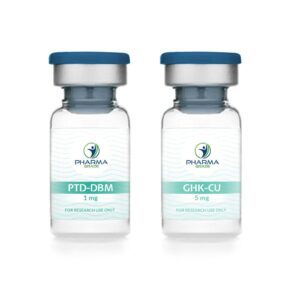
Buy PTD-DBM and GHK-Cu Peptide Stack from Pharma Grade Store Denmark Today! Discover Peptide Stacks offering a discount on your research compounds.
References:
[1] Pickart L, Margolina A. Regenerative and Protective Actions of the GHK-Cu Peptide in the Light of the New Gene Data. Int J Mol Sci. 2018 Jul 7;19(7):1987.
[2] Goluch-Koniuszy ZS. Nutrition of women with hair loss problem during the period of menopause. Prz Menopauzalny. 2016 Mar;15(1):56-61.
Frequently Asked Questions
Can PTD-DBM and GHK-Cu be used together?
Yes, PTD-DBM and GHK-Cu can be used together because they work on different pathways. PTD-DBM supports hair growth by blocking CXXC5 and keeping the Wnt/β-catenin pathway active, while GHK-Cu supports tissue repair, collagen activity and antioxidant protection. Research does not show any conflicts between them, so combining them is common in advanced routines, although no study tests them as a single stack.
Does GHK-Cu cause irritation?
GHK-Cu shows a low chance of irritation in published research, and it often appears in soothing and repair-focused formulas. Most reactions usually come from the base formula, not the peptide itself, especially when strong enhancers, acids or preservatives are present. Using a small test patch and starting with a low amount can help reduce sensitivity while your skin adjusts.
Do PTD-DBM and GHK-Cu improve hair growth more when combined?
There is no research that tests PTD-DBM and GHK-Cu together for a boosted hair-growth effect, but each supports hair in different ways. PTD-DBM keeps Wnt/β-catenin signaling active to support new growth, while GHK-Cu helps the scalp through repair, antioxidant action and, follicle support in lab models. Using both may target multiple parts of the growth process, but a stronger combined effect is not proven.
Does PTD-DBM help with receding hairlines?
PTD-DBM supports hair growth by blocking CXXC5 and restoring Wnt/β-catenin signaling, which plays a key role in follicle activity in non-clinical research. This makes it a promising option for areas that thin easily, including the hairline. Still, no study measures PTD-DBM specifically on receding hairlines, so results can vary based on the cause of the thinning.
Do PTD-DBM and GHK-Cu help with both skin and hair?
GHK-Cu helps both skin and hair because it supports collagen activity, elasticity, repair, and follicle health in lab models. PTD-DBM focuses mainly on hair pathways and shows strong activity in hair-growth research tied to Wnt/β-catenin signaling. Combined, GHK-Cu offers wide benefits for skin and hair, while PTD-DBM remains targeted toward scalp care and hair density.
ALL PRODUCT INFORMATION AND ARTICLES ON THIS SITE ARE FOR EDUCATIONAL PURPOSES ONLY
DISCLAIMER: All products sold by PharmaGrade.Store are for research and laboratory use only. These products are not designed for use or consumption by humans or animals. They are not to be classified as a drug, food, cosmetic, or medicinal product and must not be mislabelled or used as such. By purchasing from our Website the buyer accepts and acknowledges the risks involved with handling of these products. All articles and product information provided on this Website are for informational and educational purposes only. Handling and use of these products should be restricted to suitably qualified professionals